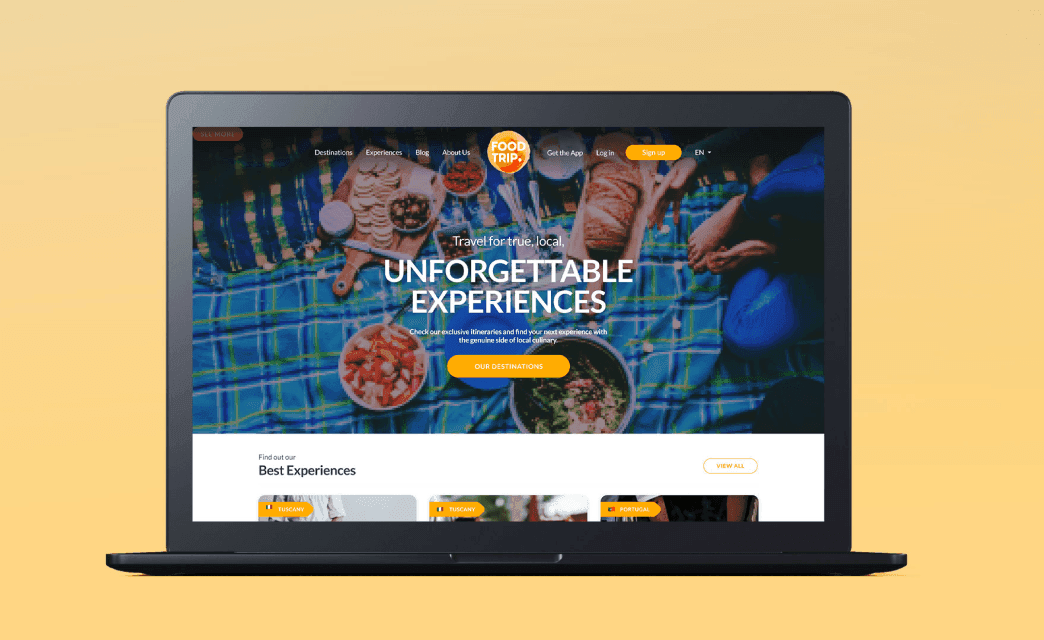
FoodTrip Website
Creating a conversion-focused web platform for unique gastronomic travel experiences.
The problem
FoodTrip, a platform offering exclusive gastronomic travel experiences, faced a significant challenge with their mobile app: conversion rates for travel package purchases were unsatisfactory. The initial project scope was to:
- Understand the main friction points in the app's purchase experience
- Redesign the app's buying flow based on research findings
However, user research revealed a more fundamental issue: users' discovery and purchasing behaviors didn't align with the mobile-only approach. The challenge evolved from improving the app's conversion flow to creating a more comprehensive platform strategy.
Key Initial Challenges:
- Low conversion rates on the mobile app
- Misalignment between user behavior and platform strategy
- Need for a broader approach to reach potential customers
The process
The project underwent a significant pivot based on early research findings, evolving from the original plan to improve the app's conversion flow to creating a more comprehensive platform strategy. Initially, the process was designed to follow a linear path of qualitative UX research, app UI redesign, development, and quantitative UX research. However, insights gathered during the initial research phase prompted a shift in approach.
We began with qualitative UX research, which proved to be crucial in reshaping our strategy. This phase involved a comprehensive approach to understanding user behavior and preferences:
Qualitative User Research: We conducted in-depth user interviews and usability tests to gather insights about user experiences and pain points. Our research process included:
- Defining test personas to ensure a representative sample
- Creating detailed interview scripts and documentation
- Developing post-test forms incorporating Net Promoter Score (NPS) and System Usability Scale (SUS)
- Recruiting and carefully screening testers to match our target audience
Key user insights from this phase were enlightening. Users expressed that while the app experience was clear and easy to use, they wouldn't naturally discover or choose to use an app for the initial stages of planning their gastronomic travel experiences. Comments like "I do a lot of research on social media before traveling; it doesn't make sense to search in two apps" highlighted the need for a more accessible platform at the discovery stage of the user journey.
These insights led us to pivot towards developing a web platform. The web development process began with creating detailed wireframes that addressed the user needs identified in our research. We then moved on to developing web components and screens using Sketch, ensuring a cohesive and user-friendly design.
To validate our new approach, we conducted remote usability testing via Maze. This allowed us to gather quantitative data on user interactions with our new web interface, helping us refine and optimize the user experience further.
Throughout the development phase, I worked closely with the development team, overseeing the creation of components in React. This collaborative approach ensured that the final product remained true to the design intent while being technically feasible and performant.
The project was managed using a Scrum-based methodology, allowing for flexibility and rapid iterations. Our lean team consisted of a project manager, two web developers, and myself as the UI/UX designer, working in close collaboration with client stakeholders. We utilized tools such as Sketch for design, Abstract for version control, and Zeplin for design handoff, streamlining our workflow and ensuring clear communication between design and development teams.
This adaptive process allowed us to transform a challenge in mobile app conversions into an opportunity to create a more comprehensive, user-centric platform that better aligned with how users actually discover and engage with gastronomic travel experiences.
The results
Increased Conversions
- Improved acquisition of gastronomic packages
- Better alignment with user discovery patterns
Enhanced User Experience
- Diversified platform offerings for end clients
- Created a seamless omnichannel experience between web and mobile
Better Business Intelligence
- More resources for gathering insights about customer habits and behaviors
- Improved understanding of the customer journey